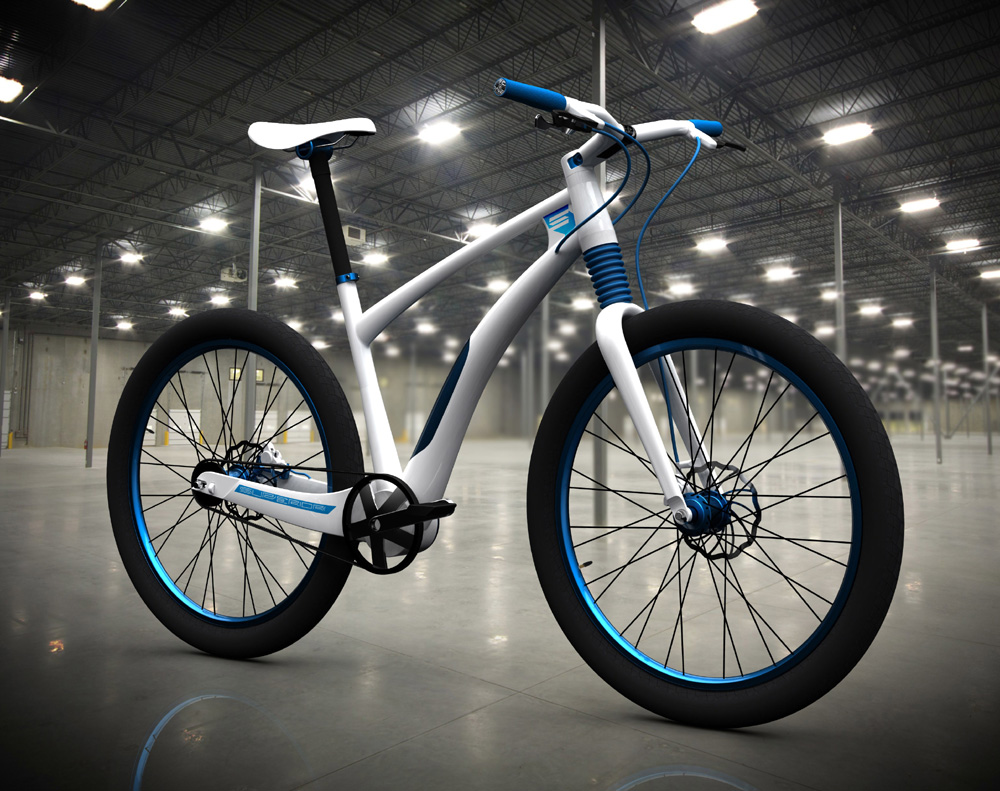
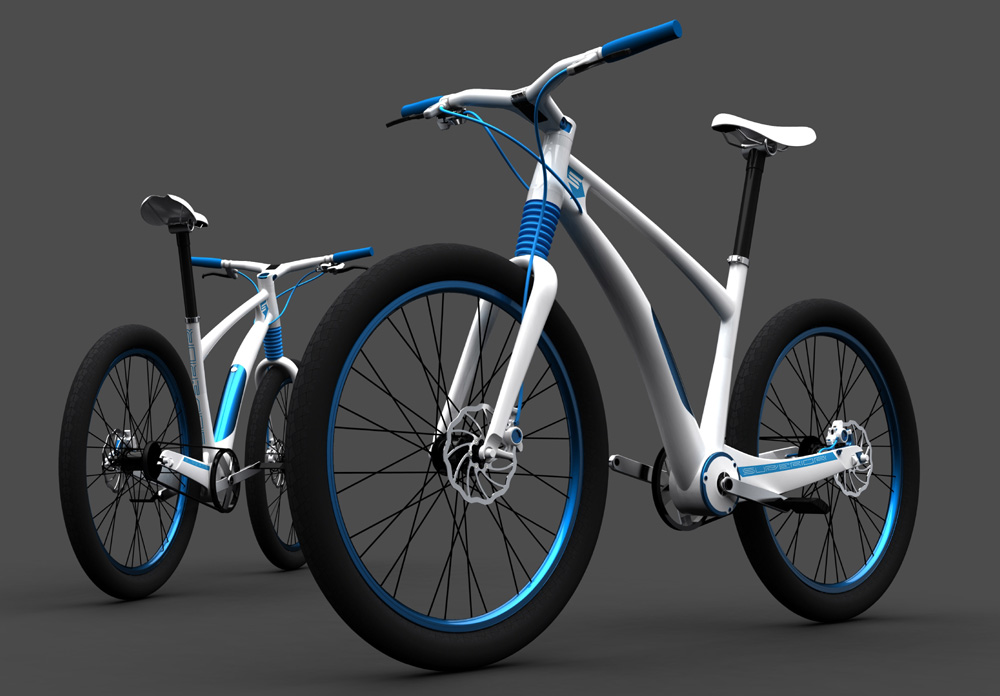
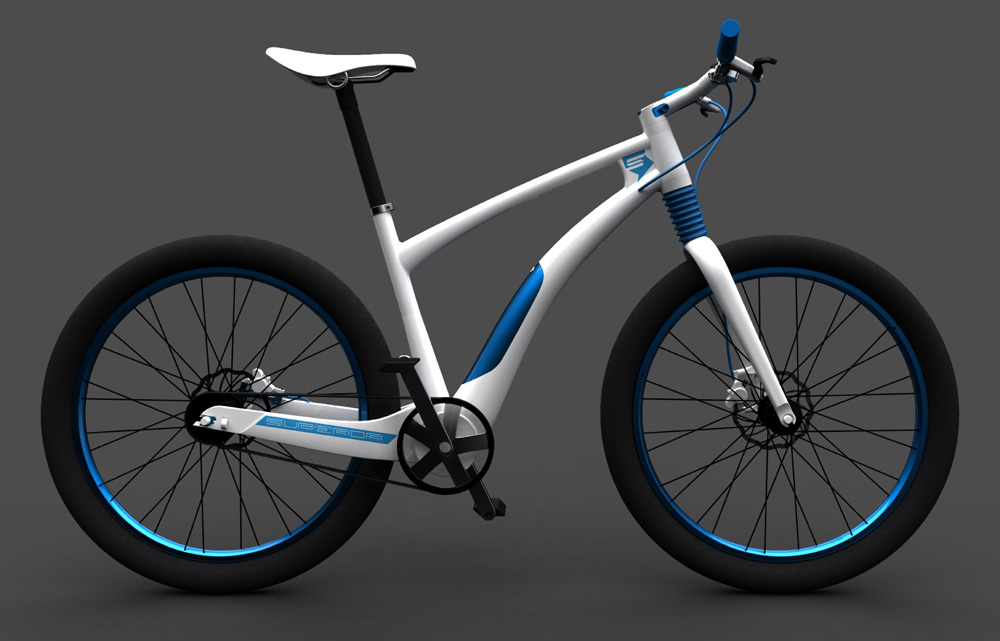
 Industrial Design student Vojtěch Sojka recently designed this ‘city electric bicycle’ as his thesis project at the University of Technology in Brno (Czech Republic). The school project was developed as a concept for the Czech bike company Superior, who helped Sojka with the production of the prototype. Sojka’s goal with the design was to create a lightweight, sporty e-bike that would appeal to young people in urban environments (not unlike this student designed e-bike that I posted recently). His design features a hydroformed aluminum frame with the motor positioned in the bottom bracket, for a clean look and better weight distribution than a motor in the rear hub. The battery is also centrally located in the seat tube, and a carbon belt drive with a Shimano Alfine hub completes the drivetrain.
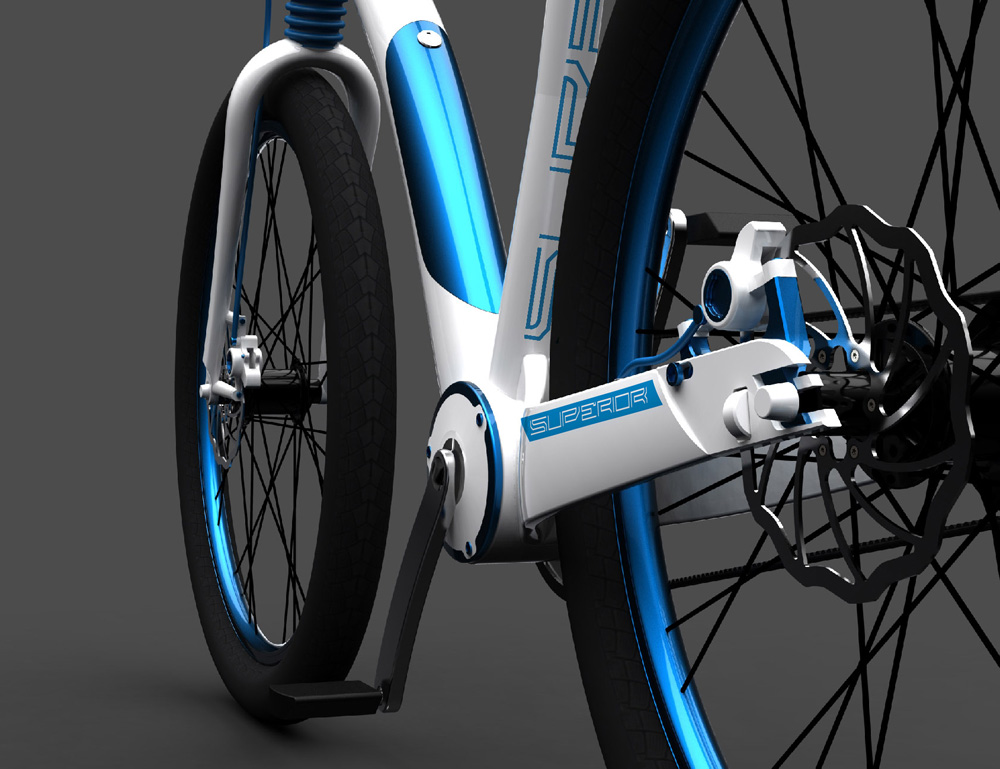 Sojka chose to eliminate the seat stays in his design for more than just aesthetic reasons. He explains:
“After trying the to design the frame with standard diamond look with a complicated dropout system, I decided to eliminate the seat stays which enables the user to put on the belt easily. This solution requires a small weight increase (about 200grams), but manipulating the belt is much easier. Also, it enables a little bit bigger deflection of the rear ‘triangle’, which improves rider comfort.”
Speaking of comfort, the wide Schwalbe Super Moto 2.35” tires also cushion the ride. Even though they complicated the design of the short chainstays, Sojka felt like the extra tire clearance was a worthwhile feature work through in his design. His solution features rear facing dropouts and a pivoting brake caliper flange. “Compared to the other solutions, its much easier to set the right position of the rear wheel and the brake – the whole caliper simply moves with the rear wheel, so the brake will be always in the right position.”
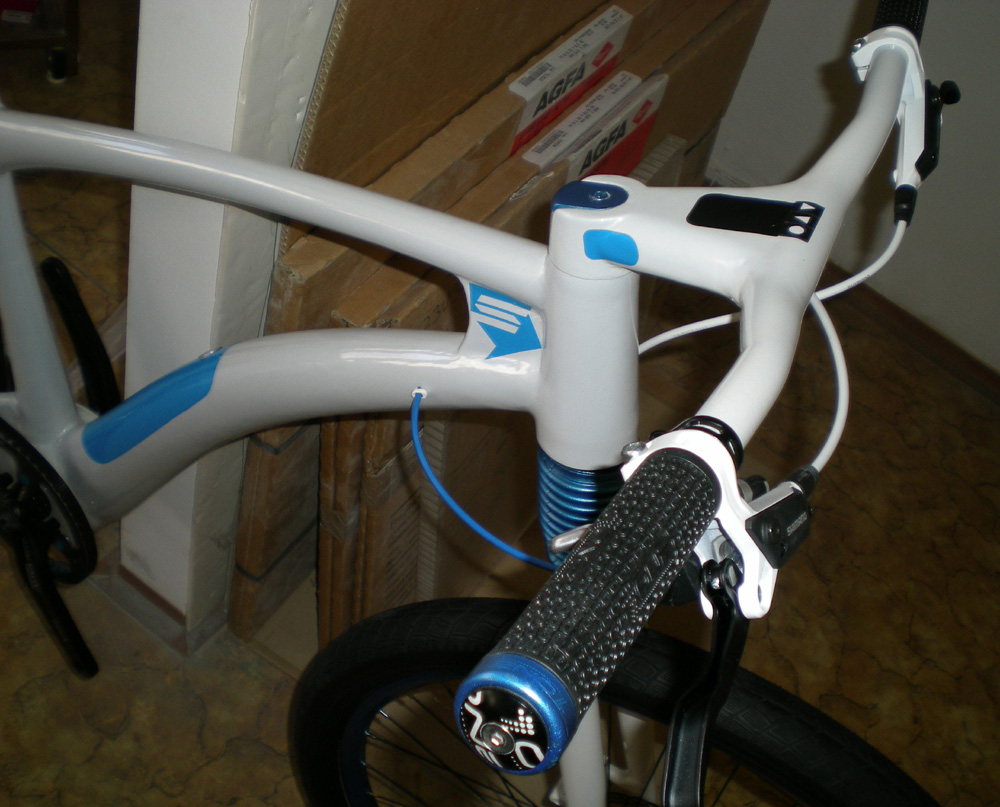
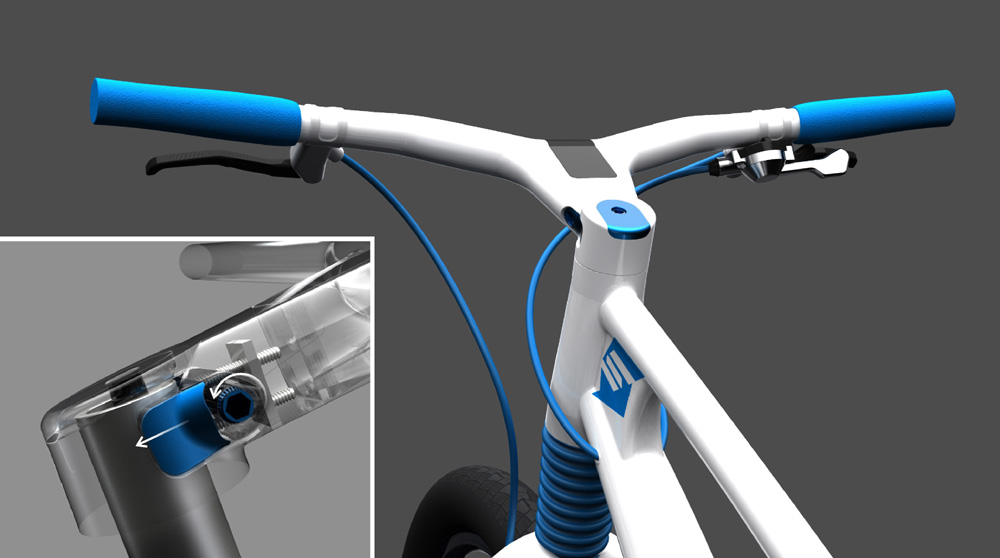 The one-piece stem and handlebar assembly is to be made from carbon fiber, and continues the shape of the headtube to unify the overall design. Outer bolts are eliminated with a work gear (similar to Crankbrothers stems) to further the clean aesthetic. Sojka mentioned that the integrated computer for controlling the power of the motor, checking speed, etc., could be replaced with a smart phone mount also integrated into the stem.
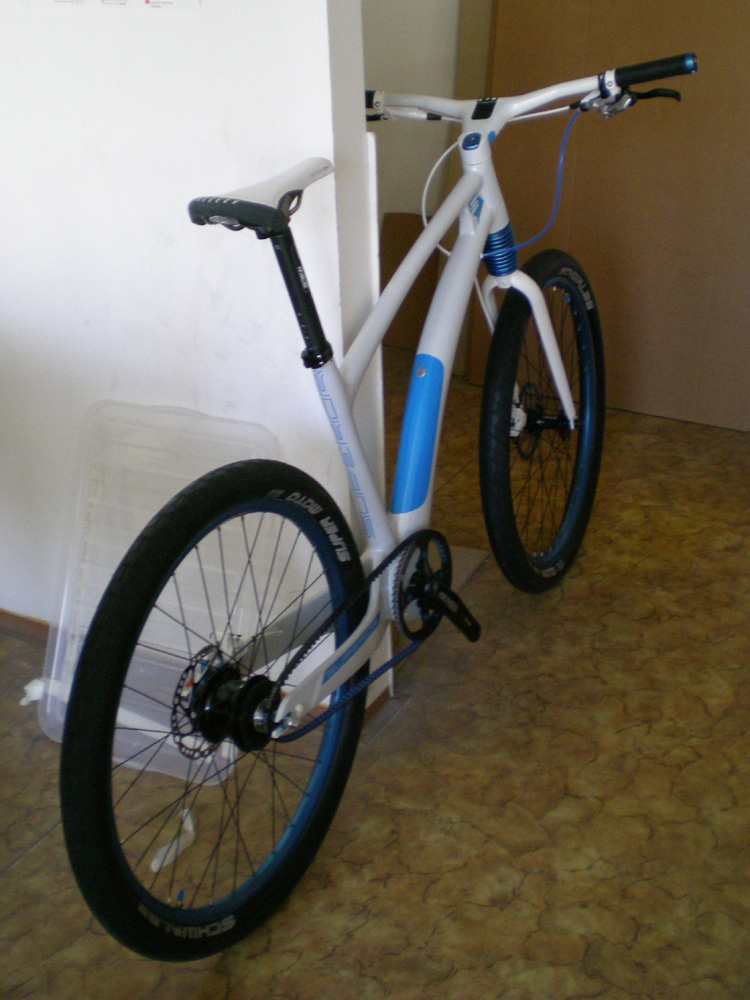
In addition to more of Sojka’s renderings, you can see a couple photos of his prototype below (rushed shots taken with a cell phone, but at least they show that the prototype exists). I am always happy to see concepts like this that can potentially expand the market for e-bikes by deviating from the stereotypical ‘electric bike look’. Hopefully, Superior will move forward with the concept, and we will see continued development of Sojka’s design in the near future.


Leave a Reply