Skip to content


Cyclorama and more

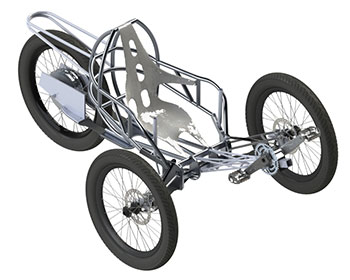
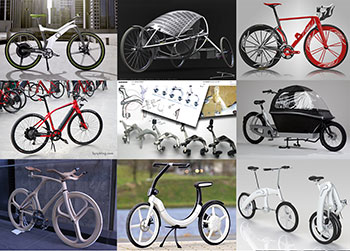
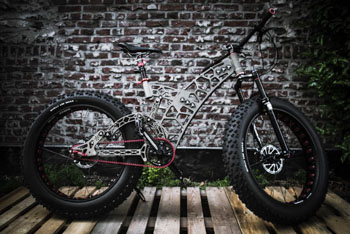
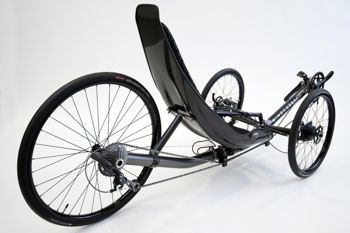
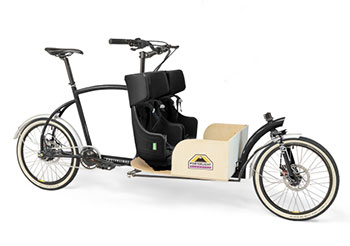
I spent a little time checking out Cyclorama.net last night. The website is the latest project of Company of Cyclists, a UK based group that I mentioned in a past post. Though the site is new, they already have a lot of content that will interest any of you who like to see various types of bicycles, including some pretty unusual ones. The “papoose bike” and the “human powered bus” pictured here are just two of the many unconventional designs that they feature in the “Ingenious” category. I encourage you to click through all of the pedal powered machines on that page…definitely interesting stuff. Cyclorama also has a blog on the site, which I have already added to my feed reader to follow.

I run across new, and interesting, websites all the time, so you may be wondering why I am so excited about this one. Well, it is probably because Bike Culture Quarterly & EnCYCLEopedia were by far my favorite bike related publications in the 80’s and early 90’s. Those are no longer in print, but I feel like Company of Cyclist is bringing exactly that type of content to the web with this new site. It is not just about slick, polished-looking new designs, but the site really is a showcase for all types of creative ideas pertaining to pedal powered machines. I have only scratched the surface in exploring the various sections of the site, but so far I am a pretty big fan.

While I am posting, I want to pass along a few additional links of interest.

Yannig Roth recently covered Bike Expo 2010 in Munich and he shared some interesting thoughts on the future of design in the bicycle industry in a blog post.

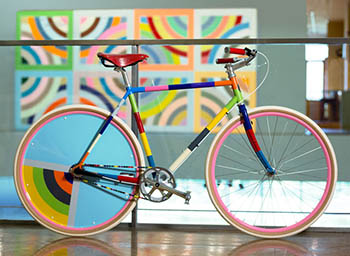
Treehugger posted about Monochrome Recycled Bikes, an initiative by Argentine designers Natan Burta and Alejandro Sanguinetti. As the post points out, the interesting part is not only that they recycle and refurbish the bikes, but that they do so while maintaining a branded identity.

Dave Weagle, inventor of the DW link used on Turner and Ibis full suspension frames, has patented a concentric dropout pivot suspension system called Split Pivot , which allows the rear axel to function as the pivot point. You can expect to see this system used on bikes from quite a few brands next year. Read more at Bike Biz and Bike Rumor.

Finally, I will mention this solar powered bike sharing system for Copenhagen. As bike sharing programs become more prevalent, I suspect that designers will increasingly view them as a unified system integrated into an overall transportation plan rather than an unrelated collection of parts… sort of like this, this, or this.

Posted in Concept.

Tagged with , , .


A creative bike parking video

Jos Sluijsmans runs the Dutch website Fietsdiensten.nl and is one of the organizers of the African Bicycle Design Contest, which I mentioned in a past post. He recently created a YouTube video titled ‘Creatief fietsparkeren’, which features some great examples of creative bicycle racks and parking designs from the Netherlands and around the world.

I had seen many of the designs featured, but a few of them were new to me. The wall mounted Wheelylift system was one that caught my attention in the video. I have no problem storing my lightweight bikes on the wall, but this seems like a good solution for heavy utility oriented designs. As Jos points out, the Wheelylift racks “can lift bikes up to 35 kg. So they are also very handy for twowheel cargobikes or tandems.”

Other parking solutions featured in the video include:

All in all, the video covers some unique approaches to bike parking and storage. In addition to these, and the ones I have mentioned in the past, can you think of other interesting designs that are worth a mention?

Posted in Uncategorized.

Tagged with , , .


Catching up- Paper Bicycle and other links

I had quite a bit to post last week, but I was way too busy with work to think about the blog. Today, I want to catch up a bit and pass along a few of the links that I have meaning to share recently.

The Paper Bicycle, designed by Nick Lobnitz, was recently exhibited at Velo City 2010 in Copenhagen (the bike that you see pictured here has the event’s logo on the chain guard). It comes as a 1 speed or an 8 speed, but as Philip Douglas of Simpel points out, “for hire systems it also comes with the new NuVinci N360.” Personally, I am happy to see a new bike that was designed with bike sharing programs in mind. In addition to the Paper Bicycle, Nick designs bike trailers. You can read an interview with him on that subject at the Bike Trailer Blog.

On a related note, Sightline Daily posted recently about cargo bikes. The article covers several different types and features quite a few pictures. Definitely worth a look.

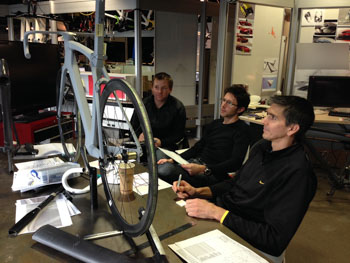
A few weeks ago, Brian Mitchell sent me images of an electric hub-driven bicycle that he designed as a team project with three other students. I never got around to mentioning it, but you can see several pictures of their prototype in this designboom post.

Christophe Robillard is another design student who recently submitted a concept bike. You can see images of his Victor city bike at his blog.

The “world’s fastest electric bike” has been hitting the design blogs lately. The carbon fiber frame PG-Bikes Blacktrail, which looks a lot like an old café racer, has a claimed top speed of over 60 mph. All that speed doesn’t come cheap though. The limited edition e-bike will set you back 59,500 €  (close to $77,000).

Atomic Duck is an online project to develop an open source velomobile. Patrick Fenner of Deferred Procrastination explains:

“The Atomic Duck is intended for daily commuting, as an option for some of the people who want to ditch the car, but still want the weather protection. It’s being released open source, so you’ll be able to see how it comes together as design continues, full designs will available online, it’ll be open for anyone to tinker and improve, and we’ll be asking for local businesses to produce it, in an attempt make it available everywhere in the world.”

Sounds like a very interesting project…definitely one that I will be watching.

There seems to be a lot of bicycle themed jewelry on the market these days. Some of it is quite unimpressive (and a bit tacky), but the stainless steel Penny farthing and tandem earrings and pendants from Polli are nicely executed. Polli is an Australian uses recycled materials and has been certified as Low CO2 by the Carbon Reduction Institute. They have new bike themed designs coming out soon (including the earrings pictured here), so keep an eye on their website for those.

According to The {Design} Blog, this e-trike concept produces sustainable energy using photosynthesis. Nice renderings, but I am skeptical.

Another concept bike I don’t think I have posted before is “The Glide”, an urban fixie that features hubless wheels, an integrated iPhone dock, and a very aggressive riding position. Though the design is completely impractical, it is an interesting form study. I know that some of you don’t disagree, but I still sort of enjoy seeing “blue sky” concept bikes like this from time to time.

Finally, a long rambling post like this one wouldn’t be complete without a Tour de France mention. Murray alerted me to this great collection of photos at the Boston Globe, which I think really captures the excitement of this year’s race. Today’s stage was another one that kept that excitement going. The change in the GC made me think though… maybe Third Eye should step in as Saxo Bank sponsor for next year. Seriously though, I do run a chain watcher on my road bike, and they are not uncommon in the pro peloton either. Hindsight is 20/20, but that ounce of prevention would have really paid off for Schleck today.

Posted in Commuter, E-bike, Student Design, Utility.

Tagged with , , , , , , .


Berner pulleys and a Rafael singlespeed

Photo credit: James Huang, CyclingNews.com

If you have checking out the tech sections of the various cycling sites lately, you have probably noticed the SRAM Red rear derailleurs with carbon fiber cages developed by Wolfgang Berner. Rafael Hoffleit, whose bikes I have mentioned on the blog a couple times before, points out that he is handcrafting the small carbon pieces for those rear derailleurs. He mentions that though it is a very small part, he is a bit proud:

”Now I see the absolute elite of our sport cornering around with a small piece that starts in my hands – very nice.”

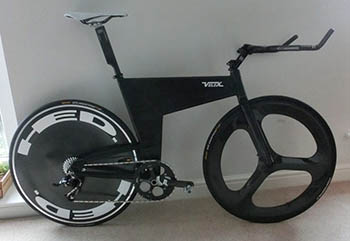
Rafael also recently received recognition for the Heidelberg singlespeed, which was selected as a BrandNewAward finalist. That bike, along with others from Rafael, will be on display at the Bike Expo in Munich from July 22nd to 25th. In addition to the urban oriented singlespeed Heildelberg, Rafael also has a new track bike based on his r-011 time trial bike. The “Spyder” (pictured here) looks very nice. As with his time trial bikes, I like the integration of a fairly standard stem into the frame. Nice details all around.

Posted in Road.

Tagged with , , , .


SCOTT Project F01 Aero Road Racing bike

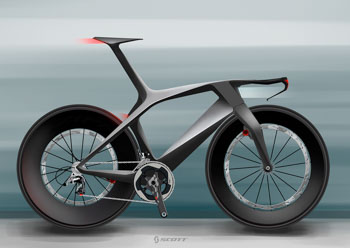
After a disappointing Tour start this year, Mark Cavendish seems to be back on track with his second stage win in two days. The attention is back on Cav, but the bike that he is riding, the recently unveiled SCOTT F01, deserves a lot of attention as well. The new aerodynamic road racing bike, which SCOTT developed in close partnership with Team HTC-Columbia and Drag2Zero services, was presented at a press conference in Rotterdam right before the Prologue.

The goal of the F01 project was to “achieve aerodynamic performance with a light and stiff profile.” Specifically, SCOTT set out to:

•Reduce overall drag of rider and bike at 45 KPH by 20 watts, between 0-20 degree crosswind with a 20 to 30 % reduction of frame drag compared to standard tube.

•Reach Addict stiffness with only 5% increase in weight

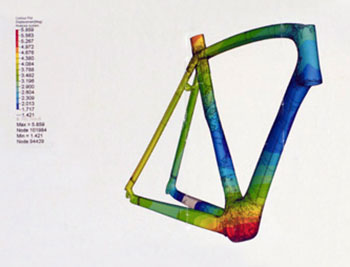
The design was developed and tested in the Mercedes-Benz Grand Prix Wind Tunnel. As you can see in the slide image from SCOTT’s presentation, it uses a 3:2 ratio tube profile that looks like an airfoil shape with the tail removed (like a very short Kamm tail profile). If you look at the picture above, the red colored sections on the backs of certain tubes indicate where the trailing airfoil edges have been removed. According to the company, the result of this project is a frame that is stiff and 20% lighter than most of the other aero frames on the market.

The bike is not available to the public yet, but it is a great example of an equipment sponsor really putting a new design through the paces during the three weeks of the Tour. That is something that I always like to see, and it really is what makes the Tour de France the race to watch for bike geeks.

Back to Cavendish though…it is no surprise that he wanted flashy custom graphics on his Project F01 bike. Check out this Bike Radar profile of his bike to see how the graphic designers at SCOTT interpreted his request for a “ninja theme.” Creating a tasteful design with splattered blood as a primary element is no easy task, but I think they did a pretty nice job with it.

Posted in Road.

Tagged with , , , , , , .


Bendable bike

A few days ago, Carlton Reid tipped me off to this London Daily Mail article, which features a bike design by Kevin Scott, a young UK based designer. To address the rising problem of bicycle theft (according to the article, more than 52 bikes are stolen in London every day), Mr. Scott designed a bike that literally “wraps around a lamp post so it can be locked-up safely – without the need for a lock or chain.” A ratchet system built into the top and down tubes allows the frame to bend when a lever on the seat tube is released.

It seems like an interesting concept, but honestly I would probably be a bit nervous at cruising speed knowing that an accidental flip of that big switch would turn the frame into an uncontrollable mess of noodle like tubes. Maybe there could be a fail-safe to keep the switch from working while the bike is moving. I am sure there are many other issues that need to be addressed before a concept like this could become a real product, but that is what the product design development stage is for. For now, Mr. Scott has an interesting idea that I believe is worth further exploration.

Scott’s concept is a runner-up in the UK’s Business Design Centre New Designer of the Year Award. The Core77 blog also posted about this design and they point out that he is dumping the award money back into the project for further development. That is good to hear. I’ll look forward to seeing the next iteration of his design.

Image credit: Tony Kyriacou/Rex Features via Core77

Posted in Concept, Student Design.

Tagged with , , , .


Tour time is here again

Photo credit: RoadBikeAction.com

Racing isn’t usually the focus of this blog, but when July rolls around, I do get pretty excited about the Tour. This year’s race has been a great one so far, and I am already in the pattern of following some of each stage live in the morning, then scrambling to get my design work done as soon as the stage ends. That pattern makes for hectic days, but I just can’t wait until later to watch the replay. As I do most every year, I have been watching the live English language Eurosport feeds, which can be found at Steephill.tv. In addition to the video feed, I have been checking out the live blog discussion at Bicycling Magazine during the last couple stages. Honestly, I haven’t paid much attention to Bicycling Magazine in many years, but I really do like the way that they are covering the Tour this year. The commentary and discussion on the live blog and in their recent podcasts is pretty interesting, and I like the way that they are interacting with readers during each stage. I have been somewhat critical of the magazine in the past, but I really do want to give them kudos for what they are doing with their web coverage. Maybe, I should give the print edition of the mag a second chance too.

I am also checking CyclingNews, VeloNews, Road Bike Action, Pez , Bike198, and other cycling sites daily for race reports and, more importantly, tech features from the Tour.  I won’t point out all the tech articles, but there are a couple so far that I want to mention.

I love time trial bikes, so RBA’s time trial tech pictorial caught my attention (still waiting on part 2 with more TT bikes and components from the Prologue). Speaking of the Prologue, check out the winning bike, Cancellara’s castrated SHIV (to borrow a term from the guys at the VeloCast in reference to the UCI required removal of the stem/steerer tube fairing).

CyclingNews points out some of the technology (or lack thereof when you consider the box section rims) used in yesterday’s stage. It is interesting to read about the various team’s different equipment choices for that stage with its seven rough cobble sections. I understand the desire of some teams to keep riders on the same bikes, but in retrospect Saxo Bank’s use of Roubaix SL3’s in place of the Tarmac SL3s (for a few select riders) certainly seems to have been a good decision.

Posted in Road.

Tagged with , , , .


Mark Sanders’ 1985 Strida thesis project

I have mentioned Mark Sanders and his Strida folding bike on the blog quite a few times in the past (if you haven’t already read the excellent guest post that he wrote a few years ago, check it out before you continue reading this one). Though he has designed quite a few interesting folding bikes over the years, the Strida is the still bike that Mark is best known for. You may not be aware though that he designed and engineered the bike that would later become the Strida while he was an Industrial Design Engineering graduate student at the Imperial College London/ Royal College of Art. Just a few days ago, Mark scanned and shared his original 1985 Masters Thesis from that project on his Issuu page.

The research section of Mark’s thesis covers a few of the other Folding bike concepts that were on the market at the time. From there, his thesis moves on to the concept design section, where you can see a couple of his early development models. The section on ergonomics is also of particular interest as it compares a typical racing position to a completely upright riding position for city bikes, an idea that Mark points out has “almost become (his) manifesto” today. The market research survey, manual engineering calculations, and prototype detail sections are all very interesting as well. I highly recommend that you read through the entire 75-page thesis.

In addition to his Thesis, Mark also scanned and uploaded his original Business Plan for the Strida. In that document, you can see the first prototype, which Mark completed within 6 months of the college project. He points out that the design of that first production prototype is “still about 70% of the current Strida.”

It is interesting to see some of the publicity that the first Strida prototype received. Now, 25 years later, the latest version of the Strida is still often mentioned on design sites, so Mark must have done something right with that original design.

Posted in Commuter, Concept, Student Design.

Tagged with , , , , .


Bicycling Science book giveaway

Looking back at the reports for the Bicycle Design Amazon store, it is clear that the book Bicycling Science is the best seller of the items I have listed. I am glad to see that, because it is definitely the first book that I would recommend to anyone interested in the design and engineering of bicycles (followed by Archibald Sharpe’s 1896 Bicycles and Tricycles). Originally published in 1982 by The MIT Press, Bicycling Science by Frank Rowland Whitt and David Gordon Wilson is now in its 3rd edition. Richard Ballantine called it, “the ultimate fundamentals book in cycle science” and went on to say, “for anyone with a deep interest in cycling science and human power, this book is simply essential.”

Cleaning my office this week, I found an extra copy of the book (the 2nd edition printed in 1988). Since I don’t really need two copies, I am going to give it away one to a Bicycle Design reader. All you have to do is follow Bicycle Design on Twitter or like the Facebook page then just mention this post in either place. I will pick a random winner one week from today (Thursday, July 1st at 12:00pm EST) and ship my extra copy of the book to that person. Some of you may be thinking, “great…a used 20 year old paperback. What is that, like a 2 dollar value?” Well, don’t worry, I found a couple other old (um…I mean classic) books, during my cleanup, so I’ll throw in at least one other book as well. Sure it is not as good as a free bike, but I do think the books will interest any of you who read this blog on a regular basis. Good luck!

Update 7/1: Brian Potstra (@bpotstra on Twitter) was the randomly selected winner and will receive the copy of Bicycling Science as well as a 1976 copy of ‘Winning Bicycle Racing’ by Jack Simes. Congrats to Brian!

Posted in Uncategorized.

Tagged with , , , .


Fast Forward powered pedals

Stephen Britt is one of three finalists in the UK based Barclays ‘Take One Small Step competition’, where he could win £50,000 to develop his idea into a business. His “Fast Forward” entry, the only cycling related product in the contest, is a pair of electric assist pedals. Stephen explains the idea behind his e-pedals:

“These replace your standard pedals and provide you with assistance to get you up hills, or carry heavy loads. Each pedal incorporates a motor, gearbox, Li-po batteries and a control board. As you pedal the sensors detect your effort and provide assistance. To pedal without assistance, simply flip the pedals over. They unclip and slot into a charger for charging, much like with a power tool. When fully developed they will provide a range of 10 miles and peak power of 200W. They will retail for around £200.”

You can see a video of Stephen explaining his business idea here on the Barclays website. It is not completely clear to me how this system will work based on the description in the video, but it is an interesting project that I would like to see developed further. If you agree, you can vote for Stephen’s idea to between now and July 5th. The R&D funding will go to the idea that gets the most public votes, so I would rather see it go to a cycling project than anything else.

Thanks to Peter from VeloVision and Electric Bike Magazine for the tip.

Update 7/15: Mr.  Britt won the £50,000 prize to develop this product further. Read more at Bike Biz.

Posted in E-bike.

Tagged with , , .


Shimano STEPS group for e-bikes

The Shimano Total Electric Power System, aka STEPS, is due to be launched at Eurobike in September. Bike Radar has a first look at the group, which includes a 250W electric motor and a 24V/4.0Ah lithium-ion battery that can be charged by regenerative braking. The 8-speed internally geared hub is operated by electronic shift buttons, and buttons on the brake levers operate the front a rear lights. I particularly like the way the rear light is integrated into the rear rack mounted battery pack…nice design detail.

There are certainly more powerful electric motors for bikes out there, but that doesn’t seem to be a concern for Shimano. According to a Bike World Europe article, “what sets STEPS apart from many other electric bike systems is a basic principle in its development. According to Shimano, that principle is that first and foremost, an e-Bike has to be a bicycle.”

I have been saying for a while that e-bikes are going to explode as a product category (in the U.S.) at some point, and this component group by Shimano may help to speed that growth along. I’m looking forward to seeing new bikes next year specified with this group.

Posted in E-bike.

Tagged with , , , , .


Transport+ from Trek’s Gary Fisher Collection

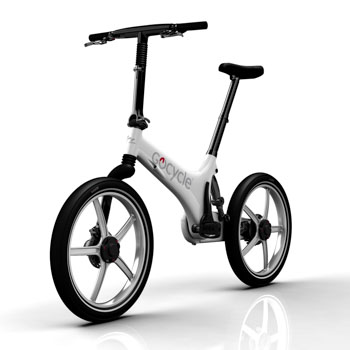
There was a good bit of interest in the Gary Fisher El Ranchero longtail bike when I posted it in 2008. Though the El Ranchero was presented at Trek World ’08 as only a concept bike, Gary himself commented at the time saying, “we will make a long bike, E bike? RIGHT on!” Well… that time has finally come. Trek has now officially introduced the electric assist longtail that Gary promised. The aluminum framed Transport+ has a 350-watt rear hub motor and a battery pack that slides under the rear cargo deck. The Transport is also available in a non-electric version. Read more about it here at Cyclelicious.

Photo by Michael Browne

The Transport+ is the bike that caught my attention (because I have been waiting to see it), but there are some other very nice looking bikes in he new Gary Fisher Collection from Trek. I really the frame shapes and graphic treatments of the new Superfly 29er mountain bikes and Cronos road and cross bikes. The retro steel Sawyer mountain bike is another one that I think looks really nice. See more of it in the slideshow at the bottom of this interview with Gary on the Trek “King of the Mountain” blog. If you haven’t seen it yet, also check out Trek’s video about the announcement on Youtube.

I can’t really mention these new bikes without acknowledging that big announcement from Trek about the Gary Fisher Collection. If you were following any bike blogs on the web yesterday, you undoubtedly heard about Trek discontinuing the Fisher brand and introducing the Gary Fisher Collection in its place. Several blogs and cycling sites picked up on a Bike Europe story yesterday with the headline “Trek Drops Gary Fisher Brand”.The article pointed out that:

“The decision to drop the Gary Fisher brand is motivated by the dealers call for Trek 29-inch and Dual Sports models. Trek did not want to put engineers, product managers and designers for both brands parallel on 29-inch and Dual Sports projects.”

From a business standpoint, that second part makes sense to me. It also means better distribution for the products since there are more Trek dealers than there were Fisher ones. The big benefit of the collection within Trek though is that Gary can now really focus on developing the projects that he really cares about. I know from a brief conversation with him at Interbike last year that he is truly passionate about electric bicycles and other categories of “bikes that can change the world”. For that reason, I am excited to hear that, under this new arrangement, he will be more involved in the planning and development of bikes that bear his name. As Gary said on Twitter yesterday:

“You will see more of me not less. I am so not dead. The Fisher brand is getting a BIG boost! Thanks!”

Though the Gary Fisher brand is no more, I really do believe that we will see more of Gary’s influence on transportation-oriented bikes from Trek in the future. I am sure that some people will write off his optimism about this new announcement as marketing hype, but I believe that he is genuinely excited about his new role. If you ask me, the Gary Fisher Collection is off to a good start and I am looking forward to seeing how it evolves within the Trek brand in the future.

Posted in Commuter, E-bike, MTB, Road, Utility.

Tagged with , , , , , .


African Bicycle Design Contest

Cycling out of Poverty is a non-profit foundation that raises money for projects that allow Africans to improve their daily lives through the use of bicycles. Currently, they are running an African Bicycle Design Contest at Wiki-Bike.com. On the website, you can read about the competition and you can upload your own ideas for durable and sustainable bicycles for Africa.

The deadline for the contest is 5 pm on Thursday, September 30th, 2010. At that point, a professional jury will judge all contributions and select 5 winning designs.  Those five winners will be awarded with a design team who will develop the designs / ideas into working prototypes. The design team that delivers the best prototype will win a 10-day trip to Kenya to train and assist a Kenyan team in producing this bicycle. For a little background on the African Bicycle Design project, check out this video featuring a team of four industrial design students from the Delft University of Technology who worked with people in Kenyan last year to develop a street vending bicycle.

I am honored and excited to be serving as one of the jurors for the 2010 competition. It is certainly my hope that we will have many great ideas to choose from, so I encourage all of you to go to the site, register, and submit your ideas for a bike to help the people of Africa. Who knows…maybe your concept will be the one that really makes a difference.

Posted in Concept.

Tagged with , , , .


Trimtab 3×3 recumbent trike

David Parrott is developing an interesting semi-enclosed recumbent trike for his Master’s thesis in Industrial Design at the University of Cincinnati DAAP. I mentioned his Trimtab 3×3 concept briefly in a previous post, but it is worth a second mention to point out that David is currently building a functional prototype of the design at Losantiville Kunstwerkhaus, a collaborative design/fabrication studio that he started in Cincinnati with a low-impact mobility theme. Take a look at the Trimtab 3×3 Flickr set to see additional renderings of the vehicle and photos of the prototype that is currently under construction. You can also follow the Losantiville Kunstwerkhaus blog for updates on the project as the prototype progresses.

David explained that he designed the Trimtab as a transportation design project created through the lens of “Slow Design”. He points out that, “it’s a 3WD, electric-assisted, lean steered delta trike with seasonal fabric skins & seating (breathable, ripstop nylon for summer; therm-a-rest style inflatable skins for winter), an acrylic aircraft-style canopy, and flatbed storage.”

He went on to mention that his design  “challenges some of the basic dogma of the bike design scene (Rear steer! Yikes!) as well as the “I can draw it but I can’t build it”, styling-driven methodology” that is increasingly common in the Industrial Design field these days. I have heard some very strong criticism of all rear steer bike or trike designs here on the blog, so I am curious to hear what you all think of David’s lean steer concept. Hopefully when the prototype is complete, he will post some video of it in action to prove the concept, so to speak. I am definitely anxious to see the results…and I wish I could ride it to see for myself.

Posted in Concept, Student Design.

Tagged with , , , .