Skip to content


A moment for bikes in New York

Photo credit: Photo: Clarence Eckerson, Streetsblog.org

I’ll take a break from sharing new bicycle concepts today to reflect a bit on what is happening in New York City this week. According to the NY Times, “in post-storm New York, the bike is having a moment of sorts.” In addition to reports about bicycles being the best (in some cases only) way to get around lower Manhattan and other parts of the city, there are countless other stories about bikes being used to generate power for charging cell phones and more. The Wall Street Journal even reports that a gas station owner in Brooklyn is telling his customers to use bikes during the gas shortage. So yeah, bikes seem to be having a moment… but will it last?

A recent post at Bike Hugger mentioned the industry adage that “bicycles are like the cockroaches of transportation in natural disasters.” That quote is a bit humorous at first, but it is very true. People on bicycles really can adapt very quickly to unforeseen disruptions that cripple other forms of transportation. Gas lines may be miles long, subways aren’t running everywhere, and infrastructure is damaged in places, but a person with a bike can get anywhere they need to in the city. It would seem that more people would recognize the fact that bicycles are incredibly efficient machines in times like these, but unfortunately that isn’t always the case. The truth is that many of those angry people in long gas lines are likely to continue to view cyclists as a nuisance, and knowing that they are getting around freely now will only fuel their opinion that bikes shouldn’t be on the roads. In the wake of the storm, you would think that many people would realize that the bicycle can be a simple solution to many of our country’s transportation (and health) problems, but until the average American’s attitude about driving and road use changes, that simply will not be the case.

Maybe attitudes are slowly starting to change though. New York Mayor Bloomberg is one influential person who gets it. During a ribbon cutting for a 20mph ‘slow zone’ this summer, he said “our roads are not here for automobiles. Our roads are here for people to get around.” The blog Roads Were Not Built for Cars reports that he later said at a press conference, “the streets were there to transport people. They are not for cars…Cyclists and pedestrians and bus riders are as important, if not, I would argue more important, than automobile riders.” Perhaps other Americans are starting to come around to the idea that streets are for people, not just people in cars, but I just don’t see that attitude shift in large numbers yet.

I am sure that there will be some people who ride a bike out of necessity in New York this week, and realize that it is just a better way to get around. Some of them will continue to ride a bike once things are “back to normal”, but the vast majority of people will settle back into old habits of driving (and ignoring the everyday cyclists they do see). I would love to see the bicycle’s ‘moment’ last, but it won’t be long before the streets of New York are clogged with ‘normal’ car traffic again. Change happens slowly though, so I just hope that the usefulness of the simple bicycle sticks in a few people’s minds after this latest storm becomes a distant memory. Maybe someone whose cell phone was charged at a  free bike-powered charging station in desperate times will keep that in mind when they are tempted to honk at a cyclist who they feel is slowing them down. Maybe this ‘moment’ will change a few people’s attitudes about bikes and cycling. I am not as optimistic as I would like to be, but I certainly hope it will.


Posted in Commuter, Utility.

Tagged with , , , , .


Two different approaches to “reinventing the wheel”

If asked to name an invention that has dramatically improved the bicycle in the last couple hundred years, the pneumatic tire would probably be at the top of many people’s lists. John Dunlop’s patent for an air filled bicycle tire in 1888 set the course for the tires that are used on almost all vehicles today. Compared to a solid rubber tire (or a solid wood wheel prior to that), Dunlop’s pneumatic tire added a level of comfort and handling that allowed for other improvements to the design of the bicycle. Almost immediately after the pneumatic tire became a standard though, inventors were trying to come up with a non-pneumatic tire that mimicked the comfort of Dunlop’s invention… but without the possibility of a flat. One hundred and twenty years later, people are still trying, so the good old fashioned pneumatic tire is obviously not easy to improve on.

Living just a few miles from Michelin’s North American Headquarters, I often hear news about the Tweel project, an experimental non-pneumatic tire design for the automotive industry. Much like the Tweel, a new prototype tire/wheel from Colorado designer Brian Russell uses flexible spokes to create an airless tire with the cushioning properties of a pneumatic. According to Chop MTB, Russell’s Energy Return Wheel uses “rubber stretched over a series of rods to provide its cushioning. These rods can be adjusted, changing the tension of the rubber to suit different types of terrain. The 29er rim is made from carbon fibre to keep weight down, and Russell is thinking about adding a thin sidewall to keep mud and trail debris out.”

Airless bike tire designs are pretty common, but the ability to tune the “pressure” by adjusting the rods makes this one pretty interesting. Check out the video at Chop MTB for more about this prototype design.

Another airless tire project going on right now is the Milele bicycle tube from Baisikeli Ugunduzi. If that name sounds familiar, it may be because they were one of the student teams in the African Bicycle Design Contest, which I participated in as a jury member a couple of years ago.  These days though, Baisikeli Ugunduzi is a social business startup in Kenya that is working for those who depend on bicycles to earn a living. The bicycle taxi drivers in Kenya (boda boda) are the ones who stand to benefit the most from the inexpensive Milele, which is a flexible, solid, foam tube. According to Baisikeli Ugunduzi, boda boda earn about $2.50 per day and spend a quarter of their income fixing flat tires. Due to flat tires boda boda struggle to feed their families and send their children to school. “

Baisikeli Ugunduzi’s Indiegogo page explains the project in much more detail. Currently the tubes are successfully being used on boda boda bikes in Kitale, Kenya, but the goal of the Indiegogo campaign is to raise 40,000 dollars to outfit 8,000 more boda boda bikes throughout the country. They have 11 days left to reach their goal, so check out the site, and see if it is a cause that you might be interested in supporting.


Posted in Commuter, Concept, MTB, Utility.

Tagged with , .


Reminder about the bike share design competition

I’m  focused on a few pressing design projects at the moment, so I don’t have much time for a post this afternoon. I do want to take a minute to remind you all about the ISUDA Bike Share Design Competition though.  The completion closes on Friday, January 11th, 2013, so you still have a lot of time to work on an entry for a public share bike that is optimized for a mobile sharing system.

See the original post with the design brief for details, and let me know if you have any questions.  You can also find mentions of the competition on the ISUDA blog, at Cyclelicious, and on the Core 77 design calendar.  I’d love to get the word out in other places, so pass along the link to anyone who you think might be interested.  We are looking forward to seeing all of the entries, and I really hope that some of the ideas can make life easier for commuters in the highly urbanized country of Singapore.

Posted in Commuter, Concept, Utility.

Tagged with , , , .


Bikes and Books: A Celebration of Bicycle Design

Photo via CinelliOnly.blogspot.com

I was traveling without internet access for a few days, so I am a bit late to pass this along. Those of you who are in or near the New York City area though, might be very interested in an event coming up this weekend. Bikes and Books: A Celebration of Bicycle Design will take place on Saturday, October 27th from 3:30 to 5pm in the Haft Auditorium at FIT in NYC. The panel discussion on bike design is part of the Designers & Books Fair 2012, which will be taking place throughout the weekend (you can download a full schedule of events here).

Cinelli president Antonio Colombo is coming all the way from Italy to take part in the discussion. Also serving on the panel will be renowned framebuilder  Richard SachsGage+DeSoto owner Mike Spriggs,  Bicycle Habitat owner Charlie McCorkell, and Lodovico Pignatti Morano, writer of the recently released book about design at Cinelli. Dan Rubinstein, editor in chief of Surface magazine, will be the moderator for what I am sure will be a very interesting discussion.

I wish I could be there in person, but a trip to NYC is not in the cards for me this weekend. If any of you make it to the event on Saturday evening though, I would love to hear about it in the comments.

Update: If you plan to attend, visit the Friends Ticket Offer page for discounted admission to all events ($15 instead of the $25 regular price for Bikes and Books with the discount code BIKES2012).

Posted in Uncategorized.

Tagged with , , , .


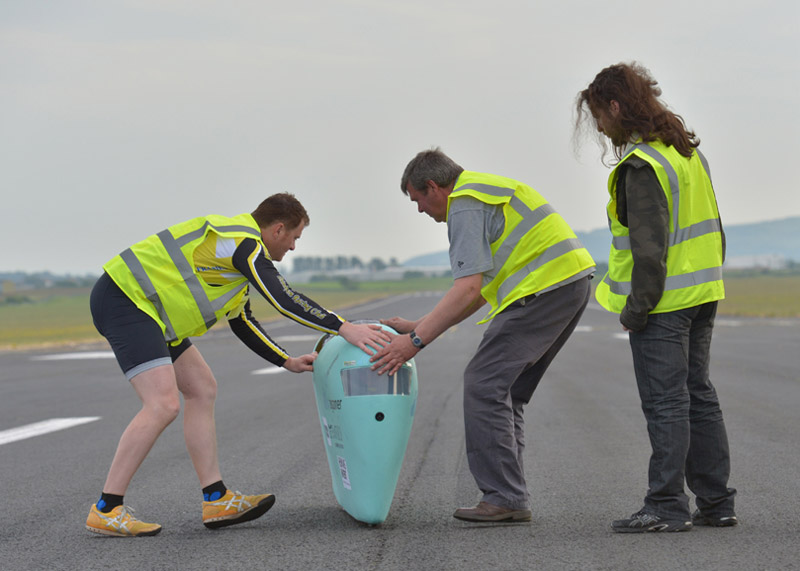
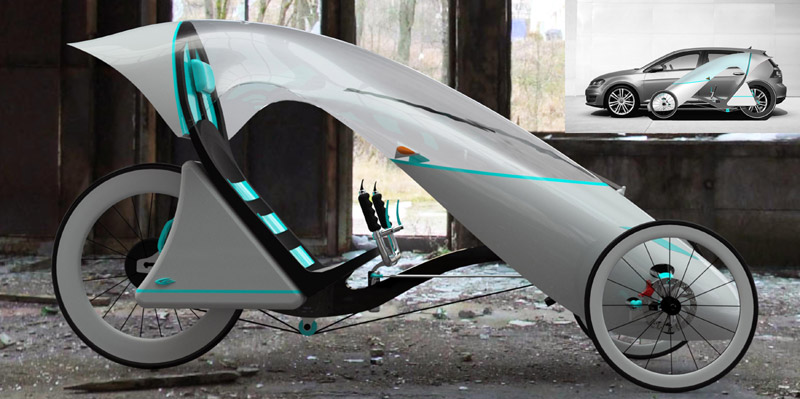
VeloTilt: Design of a low drag practical velomobile

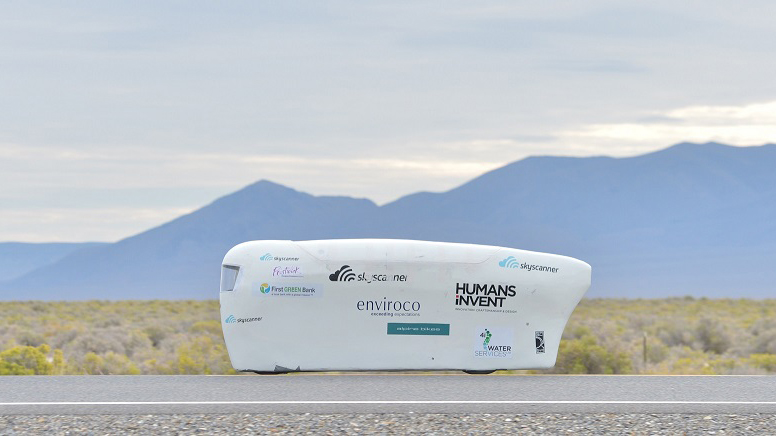
Recently, Arnold Ligtvoet from RaptoBike sent me a link to an interesting project that he is involved with.  The goal is to develop a velomobile that is both practical and fast, and the team that is working on the VeloTilt certainly has the credentials to make it happen.  The development team consists of Will Schermer- the idea and funding guy, David Weilemaker- design and aerodynamics, George-emile Tokaya- design and ergonomics, Bram Smit- FFWD, design and construction, Jan Reus- composites, and Arnold Ligtvoet- commercial development. Wielemaker and Tokaya are both members of the Delft Technical University HPT team and were designers of the Velox2, which reached a speed of 129.6 Km/h (80.1 mph) at Battle Mountain, NV, so a lot of what they learned from that experience is going into this project.

In a presentation during the Velomobile Seminar in Dronten, NL last month, the team pointed out a few issues with current velomobiles:

  • Not always easy to enter and exit
  • Fall over when cornering too fast
  • Limited cargo space
  • Not easy to maintain
  • Require a large storage area

They also outlined the design goals for the VeloTilt project:

  • Tilting for safe cornering and fun to ride
  • Easy entrance
  • Usable for people from 1.6 to 2 meter ( roughly 5’ 4” to 6’ 7”)
  • 70 liters of luggage space
  • Excellent braking
  • Speed 55km/h with 150 watts of power
  • All technical parts easily accessible
  • Storage in .8 x 1 meter space

You can see CAD renderings of the design at its current stage in this blog post, where you will also find all of the presentation slides from Dronton.  The front wheel drive tilting trike features 20” side mounting wheels, with dual disc brakes in the back and a drum brake in the front.  Risse shocks are used on the rear wheels, and the front is driven by a 3-speed hub and 9-speed derailleur. The overall dimensions are 248 cm long by 76 cm wide by 105 cm tall (roughly 8’ 1” x 2’ 6” x 3’ “5), and the vehicle can be stored upright on its end as seen here.

It is a pretty interesting project, so I look forward to learning more about it as it develops. I will definitely pass along any further info about the project as it comes to me, so stay tuned.


Posted in Commuter, Concept.

Tagged with , , , .


MiniMum by Omer Sagiv

MiniMum is the latest bike idea from designer Omer Sagiv, whose previous concept bikes I featured in a 2010 post. The MiniMum was designed as a simplified city bike; as Omer says, “using the minimum production effort, and on the other hand getting maximum user experience.” The frame is made from aluminum tubes and a steel cable and features monoblades front and rear. He explains that the wire cable “supports the seatpost by maintaining a flexible tension towards the front of the bike, in a very elegant and light way- giving it also its uniqueness.” See further descriptions of Omer’s concept on the presentation boards you see here.

Interesting concept, but the first issue that I jumped out at me when I viewed the renderings was the height of the cable that serves as the effective top tube. In relationship to seat/stem height, it looks like it would require a very high step over which is not desirable if you are riding in street clothes (not to mention that fact that a high steel cable can be a bit intimidating to straddle). Short of a quick ride on a Slingshot frame many years ago though, I have no experience with tensioned cable frame designs, so I would love to hear feedback from those of you with firsthand experience. I am sure that Omer would appreciate any constructive comments on the design as well.


Posted in Commuter, Concept.

Tagged with , , , .


Eric Birkhauser’s ZIPcycle share concept

Eric Birkhauser ZIPcycle designMy post about Eric Birkhauser’s Petal Velomobile concept generated some good discussion earlier this year. The architect’s latest project, ZIPcycle, is a work in progress that will be part of a larger project that he is working on… a book on active transit systems.  This time around, in addition to a sleek recumbent HPV, he is designing infrastructure to support it. The HELIOtrope concept is one part of that, “a dispensary for a ZIPcycle sharing program.”   The overhead storage structure has two access points, and racks for eighty ZIPcycles (or standard bikes).  It could even charge electric assist ZIPcycles as they are up in the air waiting for the next user to check them out.

I encourage you to read more about the idea behind the ZIPcycle, and the HELIOtrope structure, on Eric’s website.  As I mentioned earlier, this is a work in progress not a fully developed concept, so I am sure that he would welcome any comments or suggestions.  Let him know what you think about the feasibility of the concept in the comments section below.

HELIOtrope bicycle storage and delevery system

Posted in Commuter, Concept, E-bike.

Tagged with , , , , , .


Development of the new Orbea Ordu time trial bike

Ronan Bariou is a product designer for Orbea, and his Behance portfolio page provides a glimpse into the design work that goes into bikes from the company.  The latest project that he has uploaded is the new 2013 Orbea Ordu time trial bike, and he shares some of the sketches and CAD models from the design and development process. You can see a few of the images below, but check out his ORDU III project page to see several more.

Ronan’s personal website also has some interesting development images, like this sketch from the Alma mountain bike, or this rendering page from the Orca road frame.  I can’t link to them all, but I encourage you to click around and explore the projects section of his site. It is always fun to get a glimpse into the development process of products that we are all familiar with, so I appreciate the fact that Ronan is willing to share some of the design work that goes into Orbea’s bikes.

Posted in Road.

Tagged with , , , , , .


Catching up again

Yeah…I know that I sound like a broken record by prefacing most every post lately with a mention of how busy I am with work and other projects. I really haven’t been able to spend much time thinking about this blog lately though, so please bear with me while posts are infrequent, and my responses to emails and comments are delayed (or nonexistent). If you sent me a submission or suggestion in the last month or so, it might not be a bad idea to send me a reminder. I am trying to get to everything, but free time has been hard to come by lately.

Today, I just want to quickly pass along a few interesting links that I have been meaning to pass along lately. In rapid-fire fashion, here they are:

As I have mentioned before, I’ve been a Cinelli fan for many years, so I am pretty excited about the new book Cinelli: The Art and Design of the Bicycle which will be available later this month. I don’t have a copy yet, but check out this post at Cool Hunting for a peek inside the book.

Speaking of bikes and art, BikeArt.gr recently held a bike art exhibition during the Athens Bike Festival. Check out their Facebook page for photos from the exhibition, and for news about bikes and art in general.  I mentioned the Bike Art volume 1 book in a post last year, and volume 2 of the series will be coming out next Spring.  Look for a review here around that time.

Terrain bike art print Thomas YangKeeping with the art theme, Thomas Yang of 100 Copies has some new pieces on his site. I particularly like the “Cityscape” and “Terrain” posters, designed by Thomas Yang & Chris Soh, and photographed by Allan Ng from The Republic Studio.

Vizibelt is an LED belt designed by Will Williams. As you can see in this video, the surface of the colored belts light up very evenly, making it an easy and effective way for cyclists to increase their visibility at night. He is currently trying to crowd fund the project, so check out his Indiegogo page if you are interested.

Another crowd funded project underway at the moment is the Square, from Clean Bottle.  On their Kickstarter page, they point out that the new bottle is “the product of a 3 year collaboration between engineers and designers with backgrounds from Apple, Frog Design and Stanford.” As you might guess from the shape, this one will not fit into the bottle cage on your bike, but it is a nice lifestyle bottle that you never have to worry about rolling away when you set it down. It looks really good too, which probably explains why they have exceeded their original funding goal by a large margin.

I am no expert on recumbent trikes, but the monocoque carbon frame sport trike from Sweden based Carbontrikes looks pretty interesting.  Check out the website for specs and more information about the designs. They definitely look fast just standing still.

Finally, I want to mention the EcoVia, which is an electric assist “human-powered commuter vehicle” by Craig Cornelius. The design is a work in progress that you can read about it on Craig’s blog, The Left-handed Cyclist.  His first post explaining the project can be found here, and he recently posted a second installment with design updates after riding the prototype. It is a very interesting project from a technical standpoint, so I encourage you to check out Craig’s site and follow along as he develops the EcoVia. I am sure he would welcome any comments on the project as well.

Posted in Commuter, Concept, E-bike.


Concept bikes from the Peugeot Design Lab

Earlier this year, I posted about the Peugeot DL122 concept bike, designed by Neil Simpson. There was quite a bit of interest in that original bike, so Neil decided to add a battery and motor to make an e-bike version that they could show at Eurobike. He redesigned the handlebars to hide the cables and to integrate a twist grip shifter for the motor and the Shimano Nexus 8 drivetrain. In addition to the renderings shown here, you can see additional renderings and detail views on Neil’s blog.  He also has a couple of photos of the prototype on his site as well.

The eDL122 is just one of three new bicycle designs from the Peugeot Design Lab. Also designed by Neil Simpson is the Di2 equipped Onyx time trial bike concept, with an adjustable “Biplane base bar” integrated into frame.  The bike was one of three Onyx vehicles presented at the Paris Motor Show, and it is interesting to see the design details that it shares with the scooter and car. See additional renderings of the bike, and photos of the prototype, on Neil’s blog.

The third concept bike is the eDL132, designed by Benjamin Goudout  (with  colors and trim by Sebastien Floutier).  This one is a carbon fiber electric bike with Alfine hydraulic disc brakes (with levers integrated into the handlebars) and an Alfine Di2 11 speed belt drivetrain. The motor and lithium-ion battery are integrated into the frame, and LED lights are integrated into the handlebars and saddle.  This one definitely fits in with sporty electric bikes like the Specialized Turbo, the Cube EPO line, and the Protanium Diavleo Speedbike that I mentioned in a recent post.  Actually, I think this Peugeot  concept is a step above all of those bikes in terms of style and design.  Designs like this one, and the eDL122, definitely help to change the common perception that all e-bikes are geeky, clunky-looking afterthoughts.

Nice job by Neil, Benjamin, Sebastien, and all of the designers at Peugeot on these designs. I’ll be looking forward to seeing more work like this from them in the future.

Posted in Commuter, Concept, E-bike, Events, Road, Utility.

Tagged with , , , , , .